
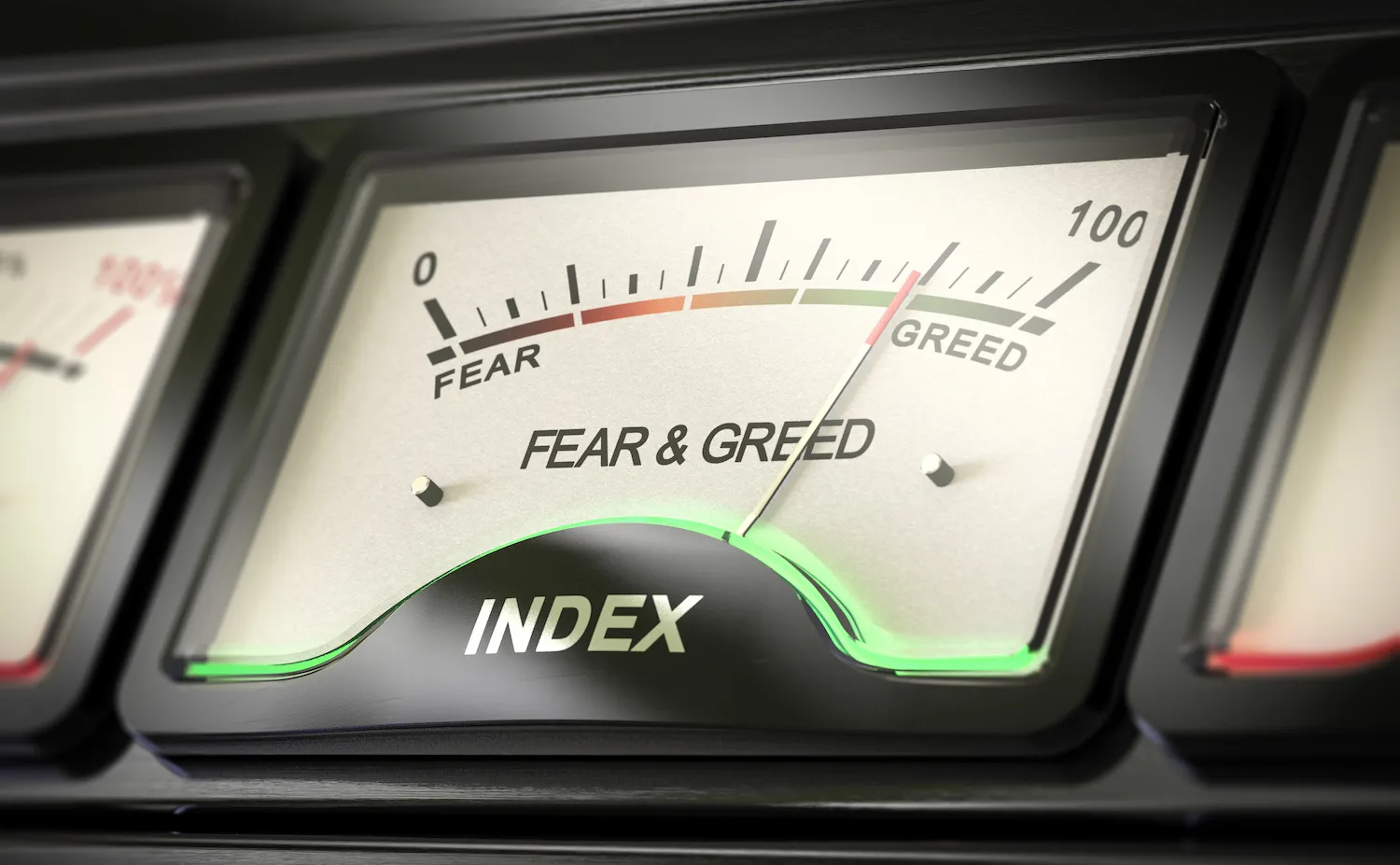
How Fear and Greed Influence Investing Decisions
Fear and greed are among the most powerful emotions underlying many financial decisions. However, there are a host of other human emotions that can play an equally important role in how you save and invest.
Greed vs Fear in the Investment Markets
Investment markets are laboratories for how investors process fear and greed in real time. When you decide to sell an investment in your portfolio because of fear, there’s someone on the other side of that transaction willing to buy, motivated at least in part by greed. That’s how markets work.
Fear is driven by your desire to avoid loss. On the flip side of the coin, greed is guided by your wish to maximize gain. In both cases, your emotions are responding to financial incentives. In one case, an incentive to preserve your investment capital and in the other case, an incentive to let your gains continue to accrue.
Understanding the Emotional Spectrum Between Fear and Greed
Obviously, there’s a lot of ground between fear and greed. Many other emotions including hope, overconfidence, avoidance, and envy can factor heavily into your financial choices.
In my experience as a financial advisor, it’s not unusual for clients to think that many of these emotions don’t really impact them personally. It’s important to remember that your money decisions involve both rational and emotional pieces. Moreover, if you’re honest, you might acknowledge that emotions lead the way in many of your choices.
You’ve likely heard the adage “decisions are made emotionally, but explained rationally.” This is largely true. When you explain a financial decision, you likely mention the due diligence and care you put into the decision, not the underlying emotions.
How Emotions Affect Financial Planning and Investing
Emotions are sometimes referred to as motivators, as in what’s motivating your behavior. You may find that description helpful if you resist tagging your choices with emotions.
Emotions and investing can work together, for your benefit, or confound your progress. Some emotions nudge you to save and invest in the first place. Other emotions cause you to worry about these investments.
Your desire for a better financial future (hope), can be a positive factor when setting financial priorities.
It’s not uncommon for your emotions resulting from a particular event, good or bad, to influence how you think about completely unrelated topics for months or years after the event occurred.
Balancing Logic and Emotion in Greed vs Fear Investing Decisions
Since you’re human and filled with emotions, consider ways to balance emotions and logic. Think about reframing how you look at money choices. This might include introducing an element of time to important decisions. That is, try to avoid fully emotionally charged impulse decisions by delaying your choice for some period of time if possible. That should allow the rational part of your brain to have a say in your decision.
Simply acknowledging the role of emotions in your financial choices is a positive step. Your financial planning framework should also help guide you through decisions. It’s beneficial to compare your anticipated choices with your planning priorities. Are they aligned?
Using a Financial Plan to Overcome Fear and Greed
Leaning on your financial plan is a good way to isolate your emotions so that they won’t hijack your money choices. Good financial decisions usually aren’t made by accident; they’re made by plan. Start there. Ready for a real conversation?
Disclosure
Apollon Wealth Management, LLC dba J.E. Wilson (Apollon) is an investment advisor registered with the SEC. This document is intended for the exclusive use of clients or prospective clients of Apollon. Any dissemination or distribution is strictly prohibited. Information provided in this document is for informational and/or educational purposes only and is not, in any way, to be considered investment advice nor a recommendation of any investment product or service. Investing involves risk, and while remaining invested can support long-term goals, it does not guarantee a profit or protect against losses. Advice may only be provided after entering into an engagement agreement and providing Apollon with all requested background and account information. Please visit our website https://apollonwealthmanagement.com for other important disclosures.